
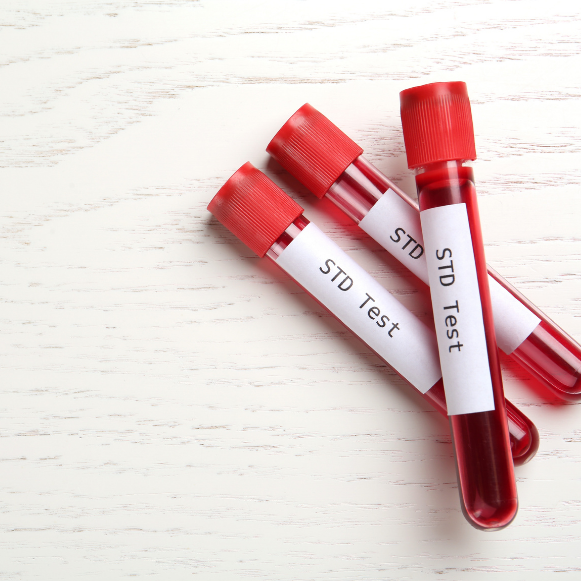
STI Testing
Regular STI testing is an important part of maintaining your sexual health. The Women's Group, in Pensacola, Florida, provides confidential testing and treatment for STIs, including gonorrhea, chlamydia, herpes, human papillomavirus (HPV), and syphilis.
What is a sexually transmitted infection?
A sexually transmitted infection (STI) is any infection spread through sexual contact. Many STIs, including chlamydia, gonorrhea, and HPV, often cause no noticeable symptoms, especially in their early stages, which is exactly why routine testing is so important. When an infection progresses to the point of causing symptoms or health complications, it may also be referred to as a sexually transmitted disease (STD), though the terms are frequently used interchangeably. Because so many STIs are silent, sexually active individuals can unknowingly pass an infection to a partner without realizing it. Regular testing is the best way to protect both your health and your partner's.
What methods exist to prevent contracting a sexually transmitted infection?
There are several effective ways to lower your risk of STIs. These include:
- Practicing safe sex with the use of a condom or other barrier method of birth control
- Routine STI testing. Sexually active women should be tested at least once a year, and more often if they have multiple partners
- Open communication with partners about STI status and testing history
- Limiting your number of sexual partners, which can help reduce overall exposure risk
What are the most common sexually transmitted infections?
The most common STIs in the United States are:
- Genital human papillomavirus (HPV)
- Chlamydia
- Trichomoniasis
- Gonorrhea
- Genital herpes
- Syphilis
- Human immunodeficiency virus (HIV)
- Pubic lice
- Hepatitis B
Who should be tested for a sexually transmitted infection?
The CDC recommends that sexually active individuals, especially those under 25 or with new or multiple partners, be tested for STIs at least once a year. Those at increased risk, including individuals with multiple or anonymous partners, may benefit from more frequent testing, generally every 3 to 6 months. This can include individuals who have unprotected sex, multiple sexual partners, or engage in other higher-risk behaviors. Routine testing helps ensure that infections are caught early, when they're most treatable, and helps prevent unknowingly passing an infection to a partner.
How are sexually transmitted infections treated?
Many STIs can be effectively treated with oral antibiotics or medicated creams. Others, such as HIV and HPV, cannot currently be cured, but their symptoms and related health effects can often be well managed. For example, while HPV itself cannot be cured, related issues like genital warts can be treated and removed. Effective treatment of any STI starts with an accurate diagnosis through a physical examination and appropriate testing.
Have a question about a service?
Our team would be happy to assist you. Call us or request an appointment and we’ll guide you from there.